Reviewed · TOURS IN AMMAN
8-Day Classic Private Guided Tour Of Jordan
Petra is the star, but this tour gives you much more than one famous monument. In eight days, you move from Roman streets and Crusader fortresses to desert castles, biblical viewpoints, Bedouin country and the strange pleasure of floating in the Dead Sea. The route covers Jordan’s essential sights without requiring you to plan every transfer.
I like the private vehicle and 24-hour support, which make a busy route easier to manage. I also like the mix of guided visits and open time, especially the full day at Petra and the relaxed Dead Sea stop. The main drawback is pace: several days involve long drives, and the itinerary leaves little room for extra time in Amman or longer walks in Petra.
- Airport help from the moment you land: A representative meets you before passport control, handles the visa procedure, and connects you with your driver.
- Two of Jordan’s strongest ancient sites: Local guides are included at Petra and Jerash, where good explanation adds real value.
- A useful private-tour route: You visit northern Jordan, the Kings’ Road, Petra, Wadi Rum and the Dead Sea without changing tour groups.
- One desert night: Wadi Rum includes about two hours by jeep and dinner, giving the route a taste of desert life rather than only a drive-through visit.
- A practical package price: At $1,509.89 per person, the fare includes hotels, breakfast, transport, entrance tickets, visa assistance and several services that can add up quickly.
- A tour that works well for Italian speakers: The provider has arranged Italian-speaking assistance and drivers on some departures, though you should confirm language needs before booking.
Why This Eight-Day Route Works
Jordan is compact enough to see a lot in a week, but not so compact that the drives disappear. This itinerary uses Amman as the arrival point, then loops through the north, central highlands and southern desert before returning to the Dead Sea area and the airport.
You travel in a private, air-conditioned vehicle, so your group does not wait for strangers or follow a fixed coach schedule. That matters on sightseeing days, when you may want a short photo stop, a slower lunch, or a break after walking among ruins. It does not turn the route into a restful holiday, though. Petra, Jerash and the desert each demand energy.
The price is best judged as a package rather than a simple hotel rate. It covers seven breakfasts, accommodation in a double room, entrance tickets, airport transfers, private transport, visa assistance, local guides in Petra and Jerash, and the Wadi Rum jeep ride. International flights, lunches, most dinners, drinks, insurance and personal spending remain yours.
Landing in Amman Without Airport Stress
Your first contact with the tour comes at Queen Alia International Airport. A representative meets you before the passport control desks with your name, handles the paperwork, applies for the visa through the agency, and returns your passport. After baggage collection, a driver meets you at the exit and takes you to your Amman hotel.
This is a useful service after an international flight. You do not have to work out the visa process alone or search for a taxi. The listed start time is 10:00 a.m., but the actual arrival plan should be confirmed with the operator before you fly, especially if your flight lands much earlier or later.
Day one is deliberately light. It is a transfer and overnight stay rather than a full city tour. That is sensible after flying, but if you want extensive time in Amman, this package may feel short on the capital. Some departures have allowed about a day and a half of free time in the city, but that is not set out as a fixed part of this itinerary.
A few more things to do in Amman worth a look
- From Amman: Petra & Wadi Rum Private or group Day Tour
★ 4.9 · 750 reviews - 3-Day Private Tour from Amman: Petra, Wadi Rum, Dana, Aqaba, and Dead Sea
★ 5.0 · 425 reviews - Petra Full-Day Private Tour from Amman
★ 4.9 · 392 reviews
Desert Castles and Jordan’s Eastern Roads
Day two heads east from Amman to the desert castles: Qasr Amra, Qasr Kharana and the Azraq area. These are not fairy-tale castles with towers and moats. They are early Islamic complexes linked to caravan travel, farming, trade, rest stops and political ties with local Bedouin communities.
Qasr Amra is especially important for its old wall paintings, while Qasr Kharana has a sturdy, fortress-like appearance. The Azraq site adds another layer to the day. The buildings are spread across a broad, dry setting, so the appeal comes from both the architecture and the change in scenery east of Amman.
This is a strong choice for anyone who likes lesser-known sites and early Islamic art. It is less ideal if you want a day packed with polished visitor facilities or famous monuments. Wear shoes suited to uneven ground, bring water, and expect sun exposure. The description of this day is truncated in the supplied program, so ask for the exact order, visit lengths and lunch arrangements.
Ajloun Castle and the Roman Streets of Jerash
The northern route on day three feels very different. You pass through pine and olive country to Ajloun Castle, built in 1184 by one of Saladin’s generals. Its position helped control routes toward the Jordan Valley and Syria, and its walls make more sense when you see the high ground around it.
Ajloun is not simply a quick photo stop. The fortress gives you a clear sense of medieval military planning, with defensive walls and views across the surrounding area. Expect stairs and uneven surfaces, as you would at most old hilltop fortifications.
The day continues to Jerash, one of Jordan’s major ancient sites. Pompey took the city in 63 BC, and it later joined the Decapolis, a group of ten important Roman cities. You can expect colonnaded streets, temples, theaters and other large-scale remains spread across an expansive archaeological site.
The included local guide is valuable here. Jerash can otherwise become a parade of columns without a clear story. A guide can connect the public buildings, roads and civic life into something you can picture. The tradeoff is time. Ajloun and Jerash together make a full day, and walking at both sites may be tiring in hot weather.
Mount Nebo, Madaba and the Kings’ Road
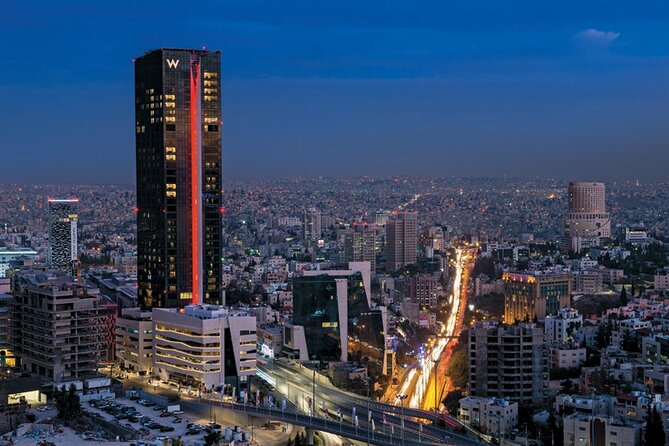
Day four shifts from Roman and medieval Jordan to sacred places and craft traditions. At Mount Nebo, Moses is traditionally said to have viewed the Holy Land and been buried. The site has long been important to Christian pilgrims, and its hilltop position gives the visit a strong sense of place.
Madaba is known for its mosaics, with the best-known example in the Greek Orthodox Church of St. George. The mosaic tradition is one of the pleasures of this stop: you are not only looking at old stones, but at detailed floor art that records places and symbols from the region.
From Madaba, the route follows the Kings’ Road south. This old trade route runs along Jordan’s central ridge and continues for roughly 200 miles. The road trip itself is part of the experience, with changing views and the dramatic Wadi al Mujib canyon along the way.
The program indicates a continuation to Kerak and a visit to its fortress, though the supplied details cut off partway through. Confirm how much time is allocated to Kerak and whether the visit is inside the castle or only a photo stop. This is one of the more demanding driving days, but it is also one of the best for seeing how Jordan’s sacred, commercial and military routes connect.
Same base, a different sort of day out:
- Amman: Petra, Wadi Rum, and Dead Sea 2-Day Tour
★ 4.9 · 1,173 reviews - 2-Day Tour: Petra, Wadi Rum, and Dead Sea from Amman
★ 5.0 · 1,141 reviews - From Amman: Petra and Wadi rum Full day Tour
★ 5.0 · 538 reviews - 2-Day Petra, Wadi Rum and Dead Sea Tour from Amman
★ 5.0 · 467 reviews
Petra Needs a Full Day
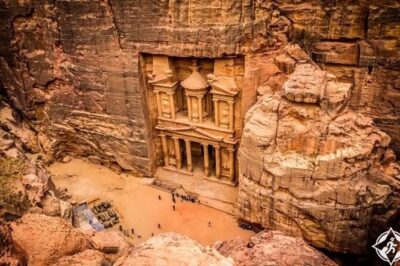
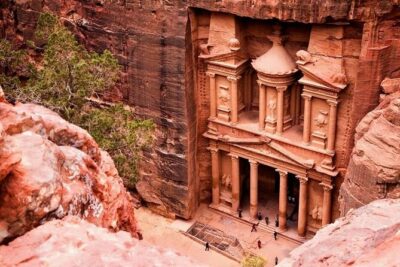
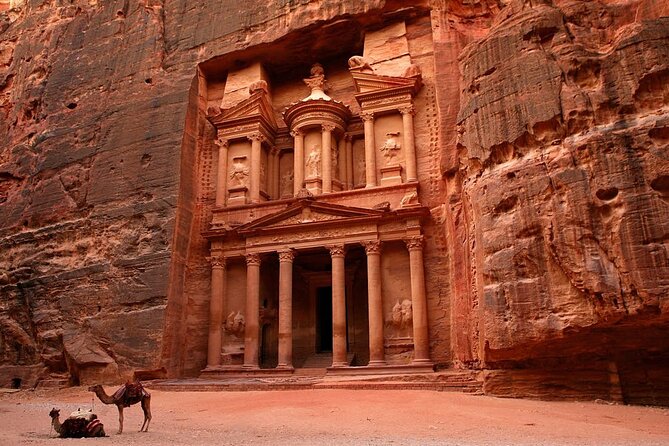
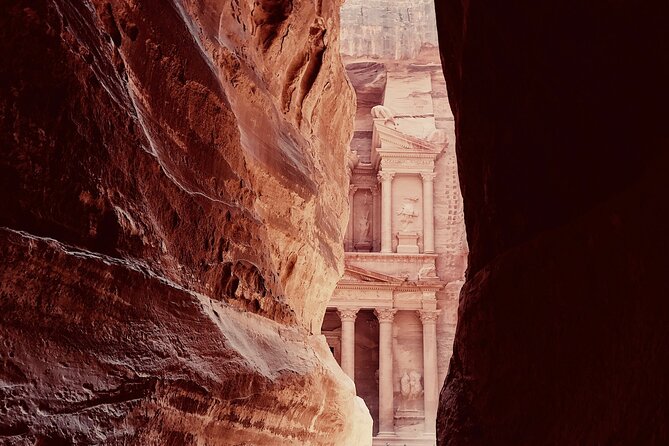
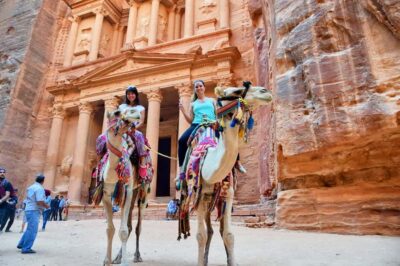
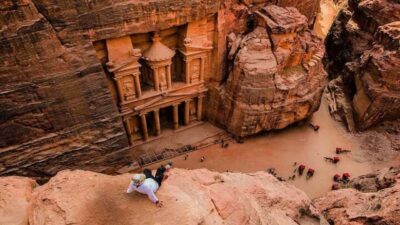
Day five gives Petra the time it deserves. From the entrance, you walk about 700 meters toward the Siq, a narrow gorge that opens suddenly onto the Treasury. That first view is one of Jordan’s great travel moments, but it is only the beginning.
The route can include the Royal Tombs, the Colonnaded Street, temples, churches, museums and the Monastery or High Place of Sacrifice. These are not close together in a neat museum layout. You will walk on uneven ground, climb if you choose the higher sites, and spend much of the day outside.
A local Petra guide is included, which helps you understand how the Nabatean city functioned rather than treating the Treasury as the whole attraction. After the guided portion, you can use the remaining time to set your own pace, subject to the day’s schedule.
Comfortable shoes are essential. You should also carry water, sun protection and a little patience for the distance. The itinerary lists several major areas but does not promise that every one will be visited in depth. If the Monastery is a priority, ask how much free walking time you will have. It is a demanding climb and should not be squeezed into the last hour.
Little Petra and a Night in Wadi Rum
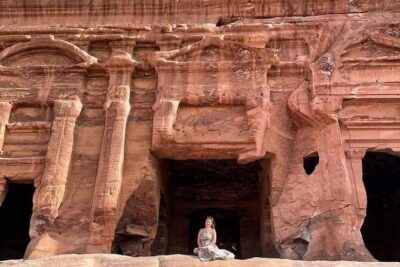
Day six starts at Little Petra, a smaller Nabatean site that provides useful context before the main desert stop. It is not a substitute for Petra, but it gives you another look at the way Nabatean builders used rock-cut spaces and narrow passages.
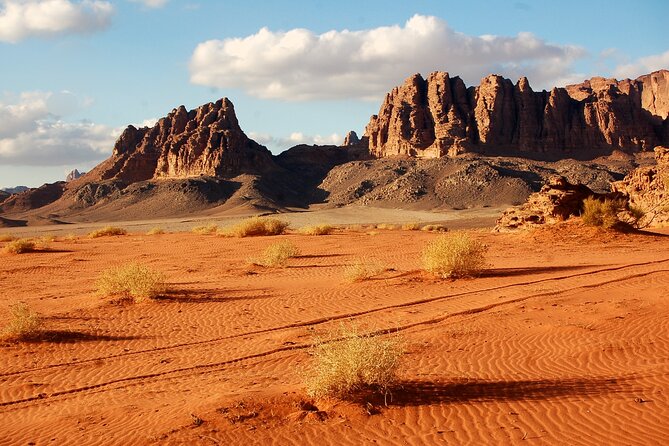
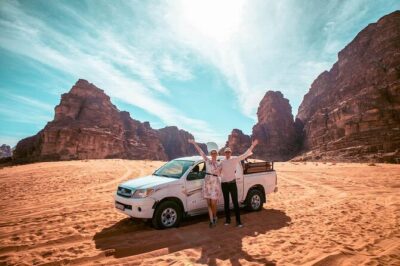
Then you continue to Wadi Rum, a huge desert region shaped by sandstone formations, canyons and open spaces. The itinerary includes about two hours in a jeep, which is enough to see several parts of the desert without turning the entire day into a long off-road outing.
The desert visit can include rock drawings dating back about 4,000 years, water wells and places linked with Prince Faisal bin Hussein and T. E. Lawrence. The setting is the main event here: bare rock, wide horizons and a sharp change from Petra’s carved facades.
Dinner is included in Wadi Rum, unlike most other evening meals. Hotel arrangements are listed on a bed-and-breakfast basis, so do not assume that every dinner is part of the package. Ask what kind of accommodation is provided in Wadi Rum, since the supplied information confirms the dinner and jeep ride but does not specify the camp standard.
Floating at the Dead Sea
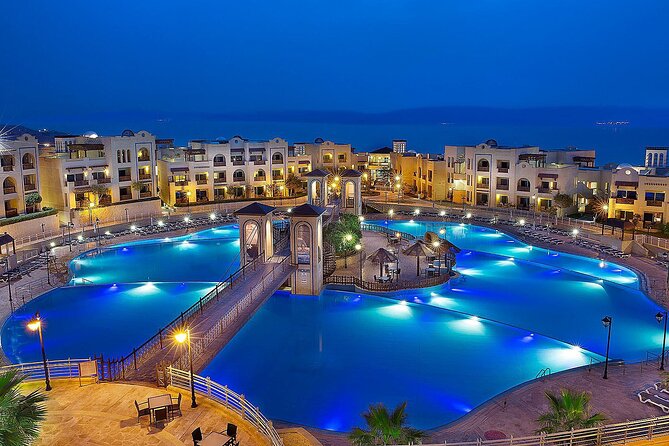
Day seven is the gentlest day physically. You head to the Dead Sea, about 400 meters below sea level, and enter a private beach for bathing. The mineral-heavy water makes floating easy, but you should avoid getting it in your eyes and should follow the beach’s safety instructions.
The stop also allows time for the famous Dead Sea mud and access to freshwater pools. This is a good counterpoint to the walking at Petra and Jerash. You can slow down, swim, eat and enjoy the quiet eastern shore.
Do not treat the Dead Sea as an ordinary swimming beach. The water is unusually buoyant, the salt can sting cuts, and the experience is more about floating than swimming lengths. Bring a swimsuit and be ready for a relaxed final full day. The tour’s description refers to sunbathing, bathing, food and freshwater pools, but it does not specify the private beach facility, meal price or towel arrangements, so check those details ahead of time.
Guides, Drivers and the Private Format
The strongest practical feature is the private setup. Your group has its own vehicle and driver, and the program includes 24-hour support. That gives you one point of contact throughout the route and makes the long transfers easier to handle.
The itinerary specifically includes local guides in Petra and Jerash. Other stops may be handled by the driver or agency representative, so you should not expect a specialist guide at every monument. That is normal for a private touring package, but it is worth knowing before you book.
The provider has worked with staff and drivers named Assma, Raed, Mimmo, Mohamed and Ferah on different arrangements. Italian-speaking assistance has also been available on some departures. If language is important to you, request it in writing before payment rather than assuming the same person will be assigned.
Who Should Book This Jordan Tour?
I would choose this tour if you want the major Jordan route handled for you and prefer a private car to a large group coach. It suits couples, families and small groups who value their own vehicle, want entrance tickets bundled, and would rather spend planning time on packing than on arranging transfers.
It also suits first-time visitors who want a broad sample: Islamic desert sites, Crusader architecture, Roman ruins, Christian pilgrimage places, Nabatean Petra, Wadi Rum and the Dead Sea. The itinerary has real variety.
I would hesitate if you want long stays in each place, a slow hiking holiday or extensive time in Amman. The schedule is full, some drives are long, and Petra requires more walking than the simple day-by-day outline may suggest. You should also budget for lunches, most dinners, drinks, insurance, flights and personal expenses.
At $1,509.89 per person, the value is strongest for two people sharing a double room and using the included private transport every day. The tickets, airport assistance, visa procedure, guides and desert excursion reduce the number of separate costs you must arrange. Compare hotel categories and the exact Wadi Rum accommodation before deciding, since those details affect how good the price feels.
Should You Book It?
Book this tour if you want Jordan’s classic sights in one organized private circuit, with Petra given a full day and Wadi Rum treated as more than a roadside stop. The airport welcome, private vehicle and included site tickets are useful comforts, especially on a first visit.
Choose something slower if your main goal is hiking, extended Amman time or several free days. Before booking, confirm the hotel names, Wadi Rum camp, guide language, exact Kerak schedule and the amount of free time at Petra. With those details clear, this is a strong seven-night introduction to Jordan that balances major monuments with desert and seaside stops.
Cancellation is flexible only up to a point: cancel at least six full days before the start for a full refund, two to six days before for a 50 percent refund, and within two days for no refund.
FAQ
Where does the tour start and end?
The tour starts at Queen Alia International Airport near Amman and ends with a transfer back to the same airport.
How long does the tour last?
The experience lasts approximately eight days, with seven overnight stays and departure to the airport after breakfast on day eight.
Is airport pickup included?
Yes. A representative meets you before passport control, assists with the visa procedure, and connects you with your driver after baggage collection.
Are international flights included?
No. International flights are not included in the tour price.
Which meals are included?
Seven breakfasts are included. Dinner is included in Wadi Rum, while lunches, drinks and most other dinners are not included.
Are guides included at the main archaeological sites?
Local guides in Petra and Jerash are included. The package does not state that a specialist guide is provided at every other stop.
How much of Wadi Rum is included?
The package includes approximately two hours of jeep touring in Wadi Rum, along with dinner and an overnight stay.
Just added in Amman
- 2-Day Private Tour in Jordan – Deluxe Tent★ 5.0 · 9 reviews
- Queen Alia Airport Transfers From / To Amman, Petra, Dead Sea.★ 5.0 · 3 reviews
- FROM AMMAN | Petra & Wadi Rum in one day | The Jordanian Mappers★ 5.0 · 12 reviews
- From Amman :Private full day tour to Jerash ,Ajoune and Um Qais★ 5.0 · 12 reviews
- From Amman to West ( Madaba, Mt Nebo, baptism site and dead sea)★ 4.0 · 5 reviews
- Dead Sea Half-Day Tour from Amman★ 5.0 · 8 reviews
- airport pick up & transportations Services★ 5.0 · 15 reviews
- NEOM Saudi Arabia Transfer from AMM Airport or Aqaba Airport AQJ★ 5.0 · 3 reviews
Tours in Amman, compared.
3-Day Private Tour from Amman: Petra, Wadi Rum, Dana, Aqaba, and Dead Sea
Read our review →