
Reviewed · JERASH & AJLOUN CASTLE TOURS
Private Tour: Full-Day Islamic Desert Castles and Ajloun Castle Trip from Amman
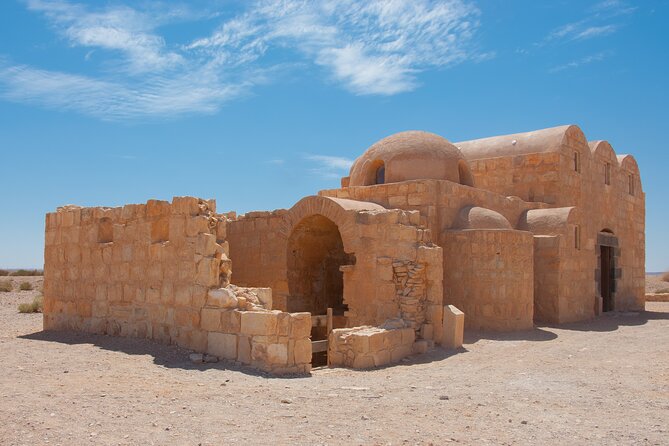
Jordan’s desert castles are not grand palaces in the usual sense. They are scattered Umayyad retreats, hunting lodges, bathhouses, and fortified meeting places, set across a broad sweep of eastern Jordan. The surprise is Quseir Amra, where faded eighth-century paintings show musicians, rulers, hunting scenes, and a zodiac on a domed ceiling. Then Ajloun brings you back to a more familiar medieval fortress, with towers, narrow stairs, and views across the Jordan Valley.
I like the private vehicle and flexible pace, since you can spend more time at a site that catches your eye instead of waiting for a large group. I also like the mix of buildings: Amra’s delicate frescoes, Kharaneh’s severe stone geometry, Azraq’s black basalt walls, and Ajloun’s military corridors. The drawback is the length. Ten hours is a serious day, and the eastern castles can feel modest if you expect towering citadels at every stop.
Key points to know before you book
- Quseir Amra has the day’s most unusual art, including frescoes and a dome painted with the zodiac.
- Azraq is built from dark basalt, and its connection with T.E. Lawrence adds a modern wartime layer.
- Ajloun provides the strongest fortress experience, with staircases, towers, defensive openings, and hill views.
- Your driver is also your English-speaking guide, and past assignments have included Mazen, Hasan, and Amer.
- The private format gives you control, including time at each site and possible itinerary adjustments.
- The $126.67 price includes transport and entrances, but meals, drinks, and gratuities are extra.
Why these four castles make a worthwhile day from Amman
This trip takes you away from Amman’s traffic and built-up streets into a quieter part of Jordan. The eastern plain is open and spare, and the castles appear as isolated blocks of stone beside roads and desert tracks. You get a look at a side of the country that many first-time visitors miss while concentrating on Petra, Wadi Rum, and Jerash.
The sites also work well together. None tells the whole story alone. Amra is about court life and art. Kharaneh raises questions about trade, travel, and administration. Azraq connects Umayyad building with the Arab Revolt and Lawrence of Arabia. Ajloun, farther west, shows how a fortress guarded routes and farmland during the wars with the Crusaders.
I would choose this day if you enjoy places that require a little imagination. These are not fully furnished palaces with rooms laid out for easy understanding. You will see stone walls, partial roofs, courtyards, arches, and worn decoration. A good driver-guide makes a real difference by explaining what you are looking at and giving the remains a human scale.
More of the eastern desert from Amman:
- From Amman: Umayyad Desert Castles Tour with Transfer
★ 4.5 · 69 reviews - From Amman: Desert Castles of Eastern Jordan Tour
★ 4.8 · 53 reviews - From Amman: Full-Day tour Amman city tour and desert castles
★ 5.0 · 23 reviews
Leaving Amman in a private car
Pickup is arranged from central Amman at about 9:00 a.m., with hotel return at the end of the day. The drive is by private, air-conditioned vehicle sized for your group, with onboard Wi-Fi listed as part of the service. That matters here because the day involves long stretches between sites, especially the return from Ajloun to Amman.
Your English-speaking driver doubles as your guide. Drivers who have handled this outing include Mazen, Hasan, and Amer. The strongest service comes from a driver who does more than point out a ruin. Mazen, for example, was praised for being punctual, patient, and willing to discuss Jordanian culture and current life, while Hasan was noted for guiding inside Amra and Kharaneh as well as driving.
The private setup also gives you some room to shape the day. You can ask to linger at a castle, shorten a stop, or discuss adding another nearby site if time allows. The route and final timing still depend on road conditions and the number of stops, but you are not locked into the rhythm of a coach tour.
Bring a hat, sunscreen, and comfortable walking shoes. There is shade at some sites, but you should not count on it across the open eastern plain. Water and snacks are sensible, since meals and drinks are not included unless you select the lunch option.
Quseir Amra and its remarkable painted bathhouse
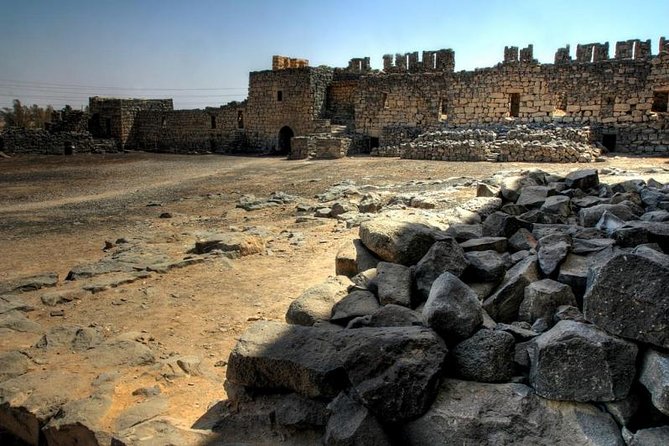
Quseir Amra is the artistic high point. At first glance, the building is small compared with a major castle. Inside, though, the surviving wall and ceiling paintings make it one of the most memorable stops in eastern Jordan.
The structure was built in the eighth century under the Umayyad caliph Walid II. It served as a hunting palace and bathhouse, and its decoration reflects the relaxed, private world of an early Islamic ruler. The frescoes include scenes of music, hunting, wine, celebrations, and nude figures. They are faded, but that makes the surviving colors and outlines feel all the more precious.
Look up in the bath chamber. The painted zodiac on the dome is the detail most likely to stay with you. It is an unusual subject for an early Islamic building, and it gives the room a strong sense of design rather than simple utility.
You will spend about an hour and a half here according to the planned schedule. That is enough time to examine the paintings without rushing, though visitors who enjoy art and archaeology may want to make Amra the day’s priority. The building is compact, so the visit feels focused rather than sprawling.
A guide can help explain the scenes and the building’s purpose. If a separate desert-castles guide is included in the option you choose, that may add useful detail. Otherwise, your driver-guide handles the explanation as part of the private service.
Kharaneh’s plain stone geometry
Qasr Al-Kharaneh is a sharp contrast to Amra. It is a large, square, two-level structure with rounded corner towers and a central courtyard. From a distance, it looks like a classic desert fortress. Inside, its purpose is less certain.
The building may have served as a fortress, a meeting place, or a caravanserai for officials and other travelers. It is often described as having Roman foundations, while its design carries Mesopotamian, Arabic, and Greek influences. You can see ornamental pilasters, niches, and rooms arranged around the courtyard.
Kharaneh is a good place to slow down and notice construction details. The exterior is plain and powerful. The inner arrangement is more refined, with repeated shapes and small decorative touches. It helps show that the Umayyad desert buildings were not all designed for the same job.
Do not expect a furnished palace or a fully reconstructed medieval town. The interest is in the plan of the building and the unanswered questions about its role. If you are traveling with a guide, ask how the structure might have worked as a stopping place or administrative center. The private format gives you time for that kind of conversation.
The eastern castles are close enough to combine efficiently, but the stops can begin to blur if you rush through them. I would rather study Kharaneh’s courtyard properly than race to collect photographs. Your driver can help balance the schedule.
Other Roman and Crusader sites from Amman:
- Full-Day Tour: Umm Qais, Jerash, and Ajloun from Amman
★ 5.0 · 162 reviews - Private Tour of Ajlun and Jerash
★ 5.0 · 130 reviews - Jerash, Ajloun, Umm Qais Day Trip
★ 5.0 · 99 reviews - Half Day Tour To Jerash From Amman.
★ 4.9 · 90 reviews
Azraq’s black basalt walls and Lawrence connection
Qasr Al-Azraq gives the eastern part of the day a darker, rougher character. It was built from black basalt in the middle of the Al-Azraq oasis, and the stone gives its walls and towers a stern appearance.
The castle began as an Umayyad hunting retreat. Much later, T.E. Lawrence used it as a headquarters during the Arab Revolt in 1917 and 1918. That association makes Azraq especially appealing to visitors who know the Lawrence story, but the fortress is worth seeing even without that connection.
Walk through the courtyards, arches, towers, and mosque area, and notice how different the basalt feels from the lighter stone at Kharaneh and Amra. The ruins are atmospheric rather than polished. Parts of the castle are open and uneven, so comfortable shoes are useful.
Azraq may be the least visually delicate stop, but it gives the day historical range. You move from Umayyad hunting culture to twentieth-century military history in the same walls. Your driver can explain how Lawrence used the location and how the fort fits into the wider story of Jordan.
The exact order of the desert stops can vary in the supplied route details, with Amra, Kharaneh, and Azraq all included before or around the journey toward Ajloun. Ask your operator to confirm the day’s sequence when you reconfirm pickup. The important point is that the trip covers all three.
Ajloun Castle changes the mood
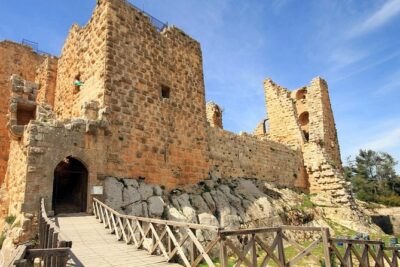
After the eastern desert sites, the trip heads toward Ajloun in northwestern Jordan. The scenery changes as you approach the hill country. Ajloun Castle, also called Qala’at ar-Rabad, sits on a hill and looks every inch the medieval fortress.
The castle was built in the twelfth century during the time of Saladin to help defend against Crusader armies. Its location mattered. From the towers, you can look across the greener hills and toward the Jordan Valley, a sharp contrast with the dry eastern plain.
Inside, expect rambling corridors, steep staircases, chambers, and defensive features. The murder holes are a memorable detail. Occupiers could pour hot oil or pitch through them onto attackers below. They make the castle’s military purpose easy to understand, even if you know little about medieval warfare.
Ajloun is more physically demanding than Amra. You may climb stairs and walk over uneven surfaces, so tell the operator in advance if you have mobility concerns. Most people can take part, but this is not a flat, effortless visit.
The scheduled time around Ajloun and the return journey accounts for much of the day. This is not a quick photo stop. Give yourself time to explore the interior and enjoy the views from the towers before settling in for the ride back to Amman.
What the $126.67 price really covers
At $126.67 per person, the tour costs more than joining a large shared bus, but you are paying for privacy and convenience as much as for sightseeing. Hotel pickup and drop-off, an air-conditioned vehicle, an English-speaking driver, Wi-Fi, and entrance fees are included when you choose the standard entrance-fee option.
That package is useful if you prefer not to arrange a rental car or work out the desert roads yourself. It also removes the need to buy tickets at each castle. For a solo visitor, the per-person cost is less budget-friendly, but the private format can be attractive if you value flexibility and personal attention. For two or more people, group discounts may improve the value.
Lunch is not automatically included. You can choose an option with lunch, and vegetarian food can be requested. Drinks, personal expenses, and tips for the driver are also extra. The tour information recommends tipping the driver, so include that in your working budget.
If you hold a Jordan Pass, tell the operator. Entrance fees may be reimbursed at the destination if you bought the tour with entry included. Arab and Gulf Cooperation Council nationals are advised to choose the Jordan Pass option or pay reduced entrance fees directly, so this detail is worth checking before booking.
Who will enjoy this trip most
I would recommend this outing to anyone who has already seen Jordan’s famous headline sites or wants a quieter historical day. It suits people interested in early Islamic architecture, archaeology, desert routes, military history, and photography.
It is also a strong choice for solo visitors who want a private arrangement without driving alone. The personal service provided by drivers such as Mazen, Hasan, and Amer has included help with site explanations, local customs, water, fruit, and practical advice for the rest of a Jordan trip.
Families and couples can benefit from the flexible schedule, though younger children may find the long drives and repeated stone ruins tiring. The day is also a good fit for visitors who enjoy asking questions and choosing how long to stay at each stop.
I would think twice if you have only one free day in Jordan and want the country’s most famous attractions. This trip does not include Petra, Wadi Rum, Jerash, or the Dead Sea. It is a specialist day for seeing a less familiar side of Jordan.
Practical details before you go
Pickup begins around 9:00 a.m. from central Amman, and the experience lasts about ten hours. Airport pickup and drop-off can be arranged on request, but you should contact the operator before assuming it is part of the standard service.
The activity is provided in English. Other languages can be requested, and clients with mobility issues should contact the operator in advance. Most local tourist restaurants do not serve alcohol, so ask ahead if that matters to your lunch plans.
Reconfirm the pickup details with the local operator the day before. Bring your voucher, sun protection, a hat, walking shoes, and any snacks or drinks you want during the long drive. A full refund is available when you cancel at least 24 hours ahead.
Should you book the desert castles and Ajloun?
Book it if you want a private, history-focused day that combines delicate Umayyad art, stark desert architecture, Lawrence of Arabia associations, and a proper medieval fortress. The guide and driver matter here, and names such as Mazen, Hasan, and Amer have been associated with especially attentive service.
Skip it if you dislike long drives, uneven castle floors, or sites that are partly ruined and open to interpretation. This is not a parade of perfect monuments. It is a thoughtful route through four very different places, and its value comes from the contrasts.
For the right visitor, the day offers a welcome change from Jordan’s busiest sights. You return to Amman tired, dusty, and with a much clearer sense of how varied the country’s Islamic and medieval past can be.
FAQ
How long does the tour last?
The tour lasts approximately 10 hours, including the drives between Amman, the desert castles, Ajloun Castle, and Amman.
What time does pickup begin?
The listed start time is 9:00 a.m. Pickup is offered from central Amman hotels.
Is this a private tour?
Yes. Only your group participates, and transport is provided by private air-conditioned vehicle.
Which castles are included?
The tour includes Quseir Amra, Qasr Al-Kharaneh, Qasr Al-Azraq, and Ajloun Castle.
Is lunch included?
Lunch is not included in the standard package. An option with lunch is available, and vegetarian meals can be requested.
Are entrance fees included?
Entrance fees to Al-Azraq, Amra, Al-Kharaneh, and Ajloun Castle are included when you select the option with entrance fees rather than the Jordan Pass option.
Is the tour conducted in English?
Yes. The tour includes an English-speaking driver. Other languages can be requested.
Can I use a Jordan Pass?
Yes. If you purchased the tour with entrance fees included and hold a Jordan Pass, inform the operator so the entrance fees can be reimbursed at the destination.
Just added in Amman
- 2-Day Private Tour in Jordan – Deluxe Tent★ 5.0 · 9 reviews
- Queen Alia Airport Transfers From / To Amman, Petra, Dead Sea.★ 5.0 · 3 reviews
- FROM AMMAN | Petra & Wadi Rum in one day | The Jordanian Mappers★ 5.0 · 12 reviews
- From Amman :Private full day tour to Jerash ,Ajoune and Um Qais★ 5.0 · 12 reviews
- From Amman to West ( Madaba, Mt Nebo, baptism site and dead sea)★ 4.0 · 5 reviews
- Dead Sea Half-Day Tour from Amman★ 5.0 · 8 reviews
- airport pick up & transportations Services★ 5.0 · 15 reviews
- Vineyard Tour in Al Mafraq Governorate★ 5.0 · 4 reviews
Jerash & Ajloun Castle Tours, compared.
Full-Day Tour: Umm Qais, Jerash, and Ajloun from Amman
Read our review →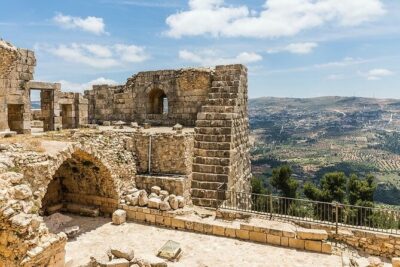
Browse the lists this tour appears in