
Reviewed · WALKING TOURS
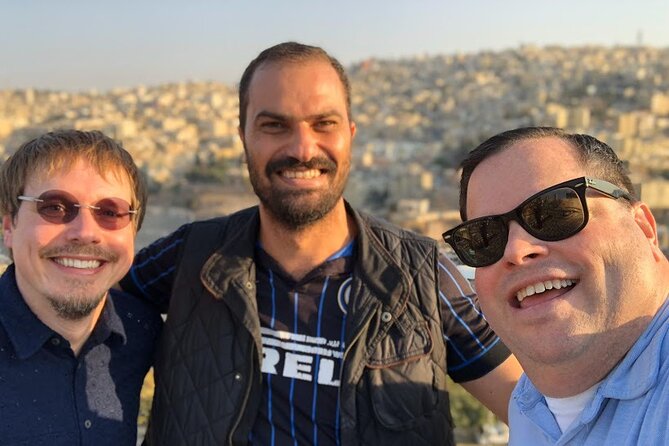
Private Walking Tour in Amman With Local
Amman’s old downtown markets are the heart of this private walking tour. You’ll follow a local guide through produce stalls, spice shops, perfume makers, food counters, and narrow market lanes, with the Grand Husseini Mosque as your starting point. The city’s major ruins appear along the way, but the focus is daily life rather than formal sightseeing.
I like the chance to ask endless questions without a larger group slowing things down, and I like the food stops, especially the kunafa at Habibah Sweets. Guides such as Orwah and Ibrahim are praised for their humor, city tips, and explanations of local customs. The main drawback is value: at $49 per person, some people may find a two-hour market walk costly, especially since the Citadel and Roman Theater are not entered.
Key things to know before you book
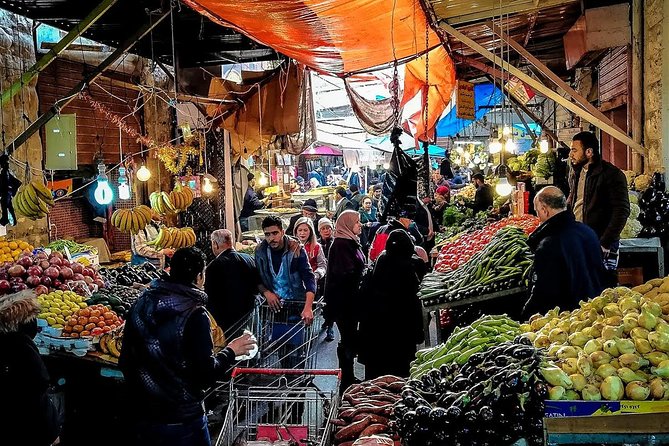
- The markets are the main event: Expect produce, spices, perfumes, clothing, souvenirs, and small local shops.
- Orwah is a frequently named guide: He is noted for his humor, hospitality, food advice, and practical tips for the rest of your stay.
- Kunafa is included: You’ll sample the famous cheese-and-pastry sweet at Habibah Sweets, a family business operating since the 1940s.
- The ancient sights are viewed from outside: The route passes the Amman Citadel, Roman Theater, and Nymphaeum, but admission is not included.
- The private format helps: Your group can set the pace and ask about Jordanian food, religion, shopping, customs, and modern Amman.
- Wear proper walking shoes: The tour lasts two to three hours and includes market lanes, streets, and standing stops.
What this Amman walking tour is really about
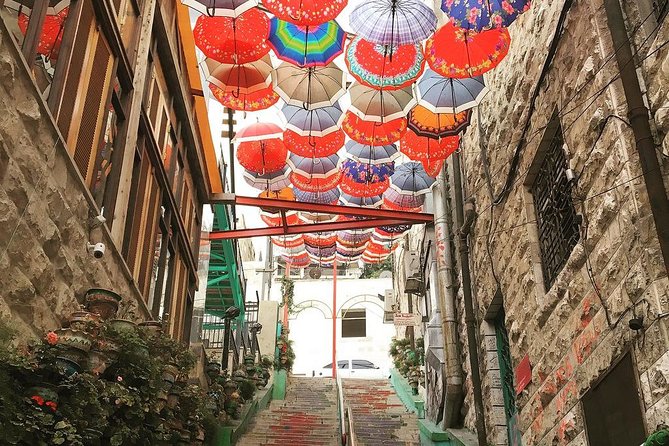
This is best understood as a local orientation walk, not a traditional archaeological tour. You’ll see the old center through the places where people shop, eat, work, and meet, rather than spending most of the time inside monuments.
That difference matters. Amman can feel confusing at first. The city spreads across hills, while downtown sits in a lower basin packed with shops and traffic. A private guide can help you understand how the old market area fits with newer neighborhoods such as Jabal al Lweibdeh.
The route also gives you a useful first look at modern Jordan. Guides explain customs, food, bargaining, religious sites, and the communities that make up Amman today. One of the most useful parts of the experience is the chance to ask what to do after the walk. Orwah, in particular, is praised for offering practical advice about restaurants, local foods, negotiation, and places to visit during the rest of a Jordan trip.
You’ll walk for about two to three hours. The listed stops add up to roughly 140 minutes, but the exact rhythm can change. A private group may linger over a food sample, spend more time in a shop, or move faster through a market that is not holding your interest.
More of Amman on foot:
- Amman Walking Tour: Hidden Gems, Culture & Street Food
★ 5.0 · 241 reviews - Amman Food Tours: 3-Hours Guided Walking Food Tour in Amman
★ 5.0 · 71 reviews - Private Street Food and Walking Tour Amman Downtown
★ 5.0 · 71 reviews
Starting at the Grand Husseini Mosque
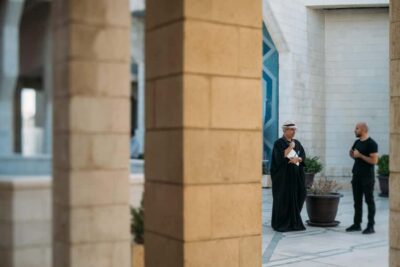
The meeting point is the Grand Husseini Mosque on King Talal Street. This is a sensible place to begin because it puts you right in the old commercial center, close to several markets and major landmarks.
The mosque was rebuilt by King Abdullah I in 1932 on the site of an earlier mosque associated with Omar Bin Al-Khattab, the second caliph, dating to around 640 AD. You may be allowed inside if dressed appropriately, but entry is not guaranteed. Dress modestly, and treat the mosque as an active place of worship rather than simply another stop for photographs.
Your guide can explain how the surrounding streets work and point out the nearby Souq Bukharia and Souq Al-Sukar. Bukharia is a useful place for souvenirs, while Al-Sukar sells fruit, vegetables, nuts, and spices.
This opening section gives you a quick lesson in how Amman’s downtown functions. It is not polished for tourism. Vendors call out from their stalls, shoppers compare produce, and the streets can feel crowded and noisy. That is part of the appeal, but it also explains why some people find the walk less exciting than expected. If you prefer grand buildings and long historical talks, the market setting may feel too ordinary.
Souq Bukharia and Souq Al-Sukar
The two markets near the mosque show different sides of downtown shopping. Souq Bukharia is geared more toward souvenirs, while Souq Al-Sukar is a working food market with seasonal produce, nuts, and spices.
I like this part of the tour because the guide can explain what you are seeing instead of leaving you to guess. You might learn how to recognize common ingredients, how local shoppers choose produce, or how prices compare with supermarkets. The guide can also help you approach stalls in a respectful way and explain when bargaining is normal.
The produce market is especially useful if you have rented an apartment or plan to prepare food. One account of the experience specifically recommends it for people who want to buy excellent ingredients for cooking. You will not simply walk through a display for tourists. The point is to see a normal shopping district and understand why downtown remains important to local residents.
This is also where the tour can feel fast. There are many stalls and side streets, and a two-hour schedule does not leave time to examine everything. If shopping is your main goal, tell the guide early. If you want a historical walk, say that too, since the default route leans heavily toward markets.
Duke of Mukhyber’s Residence and old Amman
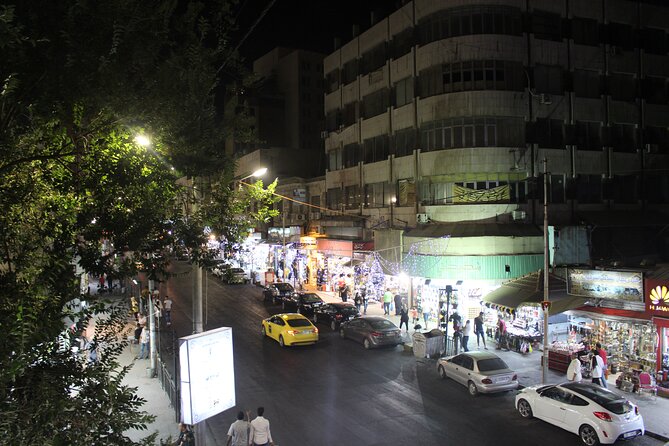
The Duke of Mukhyber’s Residence is a 1924 townhouse with an unusual past. It served as Amman’s first post office, later housed the Ministry of Finance, and eventually operated as a hotel. It has since been restored with period furnishings by a Jordanian businessman who is also the duke of the village of Mukhaybeh.
The collection of old Amman photographs is one of the most interesting details here. The pictures help you see how small and different the city once was compared with the spread-out capital you see today.
Set your expectations carefully. The stop is described as a look at the residence, but entry into the house is not guaranteed. One person expected a full interior visit and found the experience more like an overview from outside. Ask your guide at the start if the house will be open during your time slot.
The building is modest rather than grand. That is part of its charm. It offers a quiet pause between busy markets, but it will not satisfy you if you are hoping for a major museum or a long interior tour.
A few more things to do in Amman worth a look
- From Amman: Petra & Wadi Rum Private or group Day Tour
★ 4.9 · 750 reviews - 3-Day Private Tour from Amman: Petra, Wadi Rum, Dana, Aqaba, and Dead Sea
★ 5.0 · 425 reviews - Petra Full-Day Private Tour from Amman
★ 4.9 · 392 reviews - Dead Sea, Nebo, Madaba & Baptism Site Private or Group Tour
★ 4.9 · 190 reviews
Al Balad’s produce market and local shops
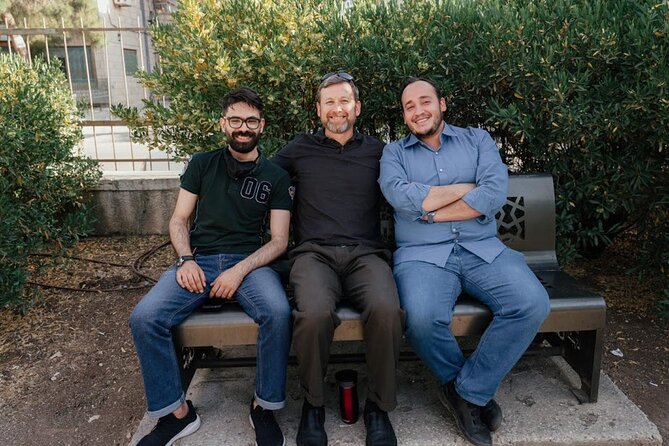
Al Balad is Amman’s oldest downtown section, and it is made up of many connected markets. The vegetable market, Souk el-Khodra, is a practical stop where much of the produce is locally grown and prices are generally lower than in many supermarkets.
The guide can lead you through the stalls while traders call out to shoppers. The scene changes with the seasons, so the exact produce on display will vary. You may see fruit, vegetables, nuts, and spices, but the experience is about the people and the rhythm of buying as much as the products.
Later, Basman Street brings more variety. The route can include spice sellers, perfume shops, traditional clothing, souvenirs, and other small businesses. You may have a chance to ask how perfume is made or how particular spices are used. You can also learn the basics of local negotiation.
Do not mistake this for a dedicated shopping tour. The walk gives you an introduction, not a long block of free time. You can browse, but the guide is also trying to keep the route moving. If you want to buy several items, arrange that clearly before the tour begins.
The kunafa stop at Habibah Sweets
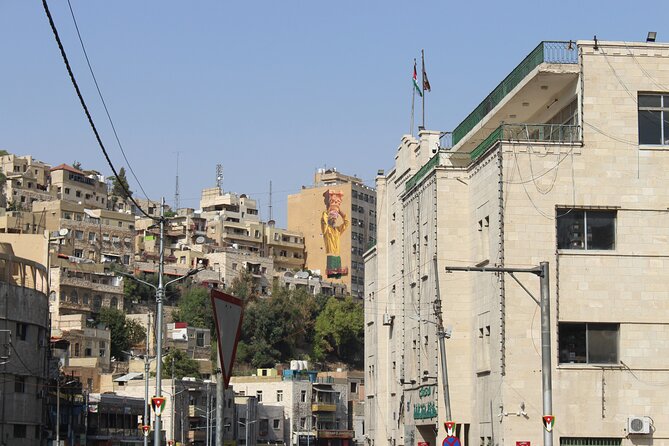
The food tasting is one of the clearest reasons to choose this tour. At Habibah Sweets on King Hussein Street, you’ll try kunafa, a Jordanian sweet made with pastry and cheese, usually finished with syrup and other toppings.
Habibah has been making sweets since the 1940s, giving the stop a strong local connection. The portion is a sample rather than a full meal, but it adds flavor to a walk that could otherwise feel like a long series of market explanations.
The tour also includes other food samples and street food tastings, along with bottled water. The exact selection can vary, so do not book this as a fixed tasting menu. If you have allergies, dietary limits, or strong dislikes, tell the guide before the walk.
The food is also a good conversation starter. Ask how the dish is served, when locals eat it, and which other Jordanian foods you should try later. Guides are often at their best during these informal moments, when they can connect food with family life, holidays, business, and everyday habits.
Seeing the Citadel, Roman Theater, and Nymphaeum
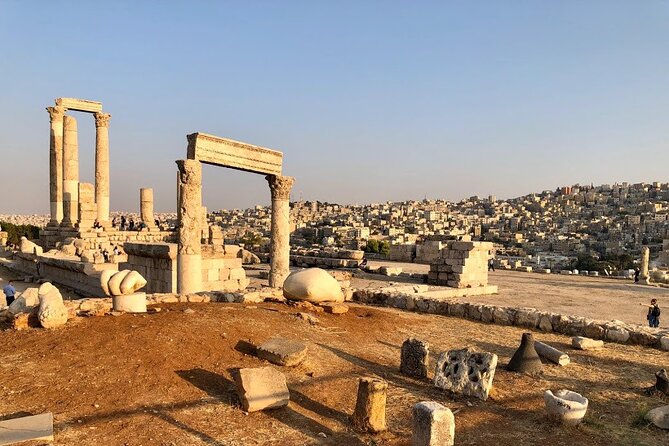
The tour passes by Amman’s best-known ancient sights, including the Citadel, the Roman Theater, and the Roman Nymphaeum. These landmarks help place the downtown markets in a much longer story.
But you will not tour the archaeological sites as part of this experience. Admission to the Citadel and Roman Theater is not included, and the guide’s role is mainly to point them out or show you routes toward them. The Nymphaeum is also viewed along the way rather than explored as a separate visit.
This is the most important distinction to understand before paying. If you have only a few hours in Amman and want to enter the Roman Theater or climb to the Citadel, book time for those sites separately. The walk can help you find them, but it does not replace a proper visit.
I actually like the division of labor. The markets and ancient sites need different kinds of attention. Trying to cover all of downtown’s food stalls, the Citadel, and the Roman Theater in two hours would produce a rushed day. Still, the tour description can create a different expectation, so ask for a clear plan if archaeology is your priority.
Jabal al Lweibdeh and the wider city
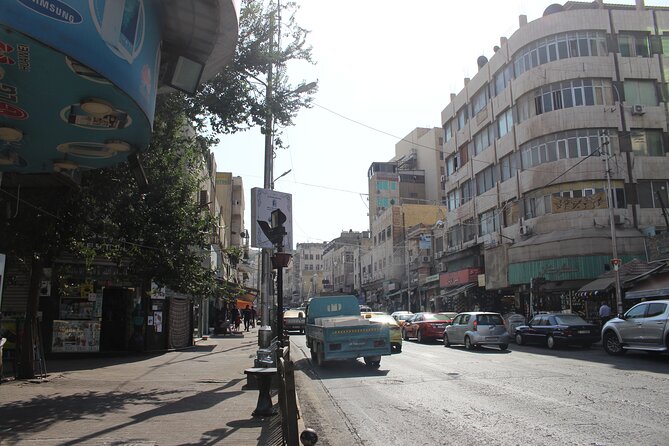
Jabal al Lweibdeh is presented as part of the broader route and offers a contrast with the old downtown markets. It is known as a more modern, artsy district, and the tour gives you a chance to connect it with Al Balad.
The amount of time spent there may vary. The listed stops focus most heavily on the downtown area, so you should not assume you will receive a long walking tour of every part of Jabal al Lweibdeh. Ask the guide how much of the district is planned for your departure time.
This flexibility is one advantage of a private tour. You can steer the conversation toward modern Amman, food, shopping, religious customs, architecture, or practical advice. The guide can also adjust the pace if you want a gentler walk.
The tradeoff is that a private tour does not automatically mean a longer tour. At $49 per person, you are paying for the guide’s time, a private setting, and included samples, not for admission to major attractions or extensive transport around the city.
How good is the $49 price?
At $49 per person, this is fairly priced only if you want personal guidance through markets and local food stops. The private format is useful for couples, families, and small groups who value questions and flexible conversation. Group discounts may improve the per-person cost.
The value is weaker if your main goal is ancient architecture. You can see the Citadel, Roman Theater, and Nymphaeum, but you still need separate time and tickets to visit the first two properly. A person seeking monuments may prefer to spend the money on direct admission and a guide focused on archaeology.
The food samples help justify part of the fee. So does the local orientation. A good guide can save you from wandering without context, explain how to shop, and suggest places to eat later. Orwah receives particularly warm praise for being friendly, funny, and generous with local tips. Ibrahim is also described as charismatic and entertaining.
Still, the experience depends heavily on your expectations. Some people find the market route fascinating. Others find the walks repetitive or too short for the price. I would book it for cultural context, not for a checklist of major sights.
Timing, walking, and practical details
You can choose from several departure times, which makes this easy to fit into a first morning or afternoon in Amman. I would choose it early in your stay. The guide can help you plan the rest of your visit, explain local customs, and point out food or shopping areas you may want to return to.
Wear comfortable walking shoes. The route includes streets, market lanes, and standing stops, and the pace can be quick. Carry water, though bottled water is included.
The meeting point is the Grand Husseini Mosque, and the stated end point is back at that meeting point. One account describes finishing near the Roman Theater instead, which was convenient for continuing sightseeing. Confirm the final route and end point directly if your next appointment depends on it.
The activity is private, and only your group participates. Service animals are allowed, public transportation is nearby, and most people can take part. The tour can be canceled for a full refund up to 24 hours before the start time. Cancellations inside that window are not refunded.
Who should book this walk?
I would choose this tour if you want a friendly introduction to downtown Amman, enjoy markets more than museums, and like learning through food and conversation. It is especially useful on your first day or two, when local advice can shape the rest of your visit.
It also suits solo visitors who want company and context without joining a large group. Families and couples may appreciate being able to ask questions at their own pace.
I would skip it if you have limited time and mainly want to enter the Citadel and Roman Theater. I would also think twice if $49 feels high for a market walk, or if you dislike shopping areas and food stalls.
FAQ
How long does the private walking tour last?
The tour lasts approximately two to three hours.
Where does the tour begin?
It begins at the Grand Husseini Mosque on King Talal Street in Amman.
Where does the tour end?
The stated end point is back at the meeting point. Confirm this when booking, since one account describes finishing near the Roman Theater.
Is the Amman Citadel included?
No. The tour passes by or points out the Amman Citadel, but entry is not included.
Is the Roman Theater included?
No. You pass by the Roman Theater, and you are advised to visit it separately after the walk.
Is the Duke of Mukhyber’s Residence open for entry?
Entry is not guaranteed. The stop includes the historic house and its old photographs, but you should ask the guide if an interior visit is possible during your tour.
Is food included?
Yes. Food samples and street food tastings are included, along with a kunafa tasting at Habibah Sweets and bottled water.
Is this a private tour?
Yes. Only your own group participates, and the itinerary can be adjusted to suit your interests.
Can I cancel for a full refund?
Yes. You can cancel at least 24 hours before the start time for a full refund. Cancellations or changes made within 24 hours are not accepted or refunded.
Should you book it?
Book this private Amman walking tour if you want to understand the city through its markets, food, and local conversations. The strongest parts are the personal guide, the downtown produce and spice stalls, the kunafa tasting, and the practical advice you can use for the rest of your Jordan trip.
Just keep the scope clear. This is not a Citadel tour, a Roman Theater visit, or a full architectural survey. It is a two-to-three-hour introduction to everyday Amman, and it works best when you want local context more than a long list of monuments.
Just added in Amman
- 3 Days Private Tour in Jordan: Discover The Best of Jordan.★ 5.0 · 13 reviews
- Petra And Little Petra Full Day Tour From Amman★ 5.0 · 11 reviews
- From Amman: 5-Hour Dead Sea Experience with Lunch & Return★ 4.7 · 19 reviews
- From Amman: Petra and Dead Sea private Full day tour★ 5.0 · 21 reviews
- Whispers of Stone, Sand & Sea: Jordan in Five Days★ 4.9 · 21 reviews
- Amman Heritage Tour: Street Food, Local Culture & Art★ 5.0 · 21 reviews
- Petra Full Day Private Group Tour from Amman & return★ 5.0 · 19 reviews
- Amman: Madaba City, Mount Nebo & Dead Sea Private Day Tour★ 4.2 · 20 reviews
Walking Tours, compared.
Amman Walking Tour: Hidden Gems, Culture & Street Food
Read our review →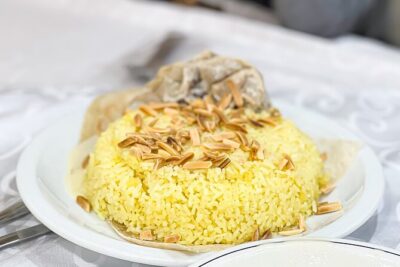
Amman Food Tours: 3-Hours Guided Walking Food Tour in Amman
Read our review →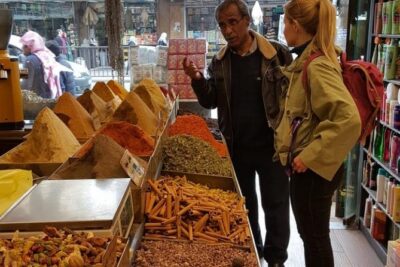
Private Street Food and Walking Tour Amman Downtown
Read our review →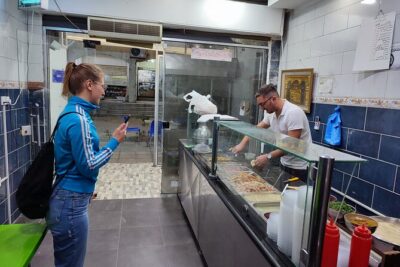

Day or Night Walking Tour in Downtown With Local
Read our review →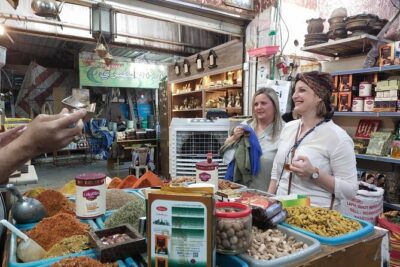
Walking Tour, Visit the Old Town and Markets, Taste Food
Read our review →
Browse the lists this tour appears in