
Reviewed · WADI RUM DESERT TOURS
Wadi Rum 4 hours morning tour or sunset tour Desert Highlights
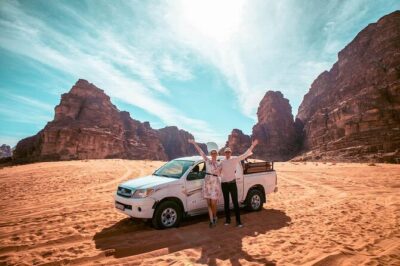
Wadi Rum is best understood from the back of a sturdy jeep, where red sand, giant rock walls, camel trails, and narrow canyons unfold one stop at a time. This four-hour outing packs in the desert’s main sights, with time for a few easy climbs and a Bedouin tea break.
I like the range here: ancient carvings and caravan routes at Khazali Canyon, followed by playful sandboarding at Al Ramal. I also like the local touch, with guides such as Majid and Sabah helping you choose safe climbing routes and explaining desert life.
The main consideration is pace. You visit many places in four hours, so some stops are brief. The walk through Abu Khashaba Canyon belongs to the morning version, while the sunset option gives you a quieter end to the day.
Key points to know before booking
- Ten desert stops in about four hours: You see springs, dunes, canyons, arches, rock formations, and historic sites without arranging several separate outings.
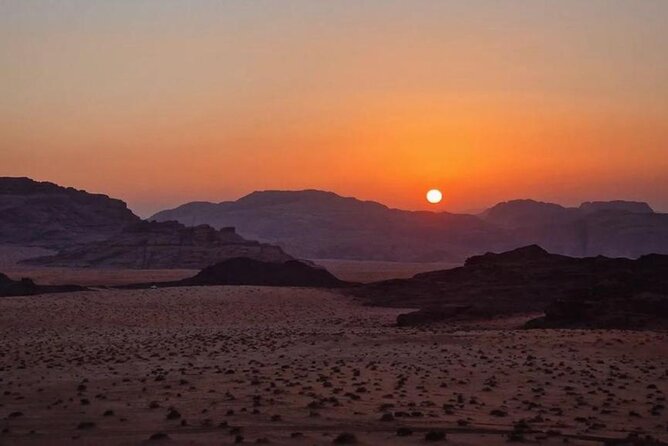
- Morning or sunset format: The morning tour includes a 30 to 45-minute walk through Abu Khashaba Canyon. The sunset tour replaces that walk with a sunset viewpoint.
- Small group size: The vehicle holds no more than 15 people, keeping the outing more personal than a large convoy.
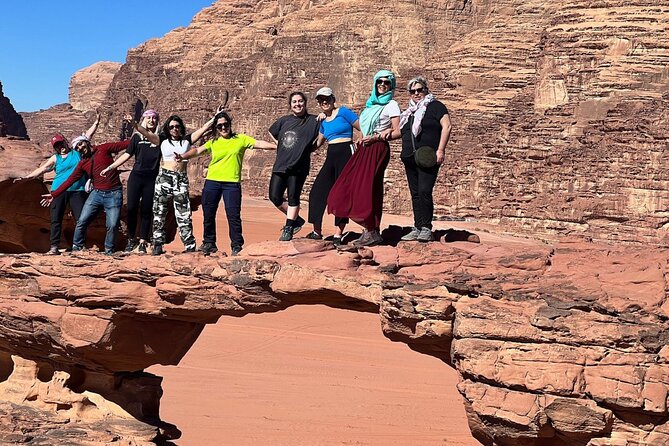
- Climbing is part of the fun: Little Bridge and Um Frouth Rock Arch offer short climbs, but proper footwear matters.
- Tea and water are included: You receive bottled water and Bedouin tea, useful in the dry desert heat.
- The visitor center transfer costs extra: Pickup and drop-off at Wadi Rum Village are included, but the transfer from the Visitor Center costs 10 JOD.
Starting at Wadi Rum Village
Your meeting point is the Rest House in Wadi Rum Village. It is the first place on your right as you enter the village, and the tour returns there at the end.
The morning outing starts at about 10:10 once everyone has arrived and met the guide. The sunset version follows the same general route but is timed for the late-day light. Because the start point is in the village, you need to arrange your own way from Aqaba to Wadi Rum, unless you book the extra transfer from the Visitor Center.
That detail matters. The advertised price is $42 per person, a fair amount for a four-hour jeep ride with a small group, a local guide, water, tea, and a long list of stops. But the 10 JOD Visitor Center transfer is not included, so check your arrival plan before you book.
The vehicle has a covered section, which proved useful during a hot April outing. You still spend time in direct sun while climbing or walking, but the ride itself offers some shelter. Bring sunglasses, sun protection, and water beyond the bottle supplied.
Other desert days out of Aqaba:
- Wadi Rum Full Day Jeep Tour + Overnight & Dinner in Bedouin Camp
★ 5.0 · 368 reviews - Wadi Rum: Morning or Sunset Jeep Tour
★ 5.0 · 285 reviews - Wadi Rum Cave Camping with Jeep Tour
★ 5.0 · 200 reviews
Lawrence’s Spring and the first desert views
Lawrence’s Spring is an easy introduction to Wadi Rum. Water runs down the mountain into troughs, with small trees and green moss around the source. Camels often gather here, giving the stop a working, lived-in feel rather than the look of a carefully arranged sight.
You can pause beside the water and look for old Thamudic inscriptions in the surrounding rock. The stop lasts about 20 minutes, enough to take photos and watch the camels without making the visit feel rushed.
The name links the spring to T. E. Lawrence and the desert campaigns associated with Lawrence of Arabia, but the place is older than that modern connection. For me, the value is seeing why a water source mattered so much to people and animals crossing this dry region.
Running down Al Ramal’s red dune
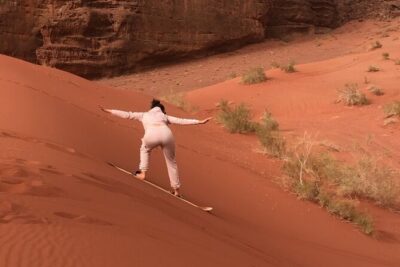
At Al Ramal, the color changes noticeably. Iron oxide gives the sand its red tone, and the soft slope makes the climb harder than it appears from below.
You have about 20 minutes here. That is enough for a short climb, wide views across the valley, and a quick run or sandboard back down. The sand can work its way into shoes, so wear footwear you can clean easily.
This stop suits anyone who wants a little action without signing up for a separate adventure. The climb is not described as long, but soft sand is tiring, especially under a strong sun. If you prefer to stay low, you can still enjoy the color and watch others make the descent.
Khazali Canyon’s carvings and water basins
Khazali Canyon narrows between split mountains and gives you a chance to leave the jeep for a closer look at the rock. Merchants and pilgrims once used routes through this area on journeys toward Egypt, Damascus, and Mecca.
Inside, you can see Thamudic, Nabataean, and Islamic inscriptions, along with images of people, animals, and feet. The rock-cut water basins near the end show how people collected and stored water in a place where every reliable source mattered.
The walk into the canyon lasts about 20 minutes. It is not a long hike, but the surface is rocky and uneven. Keep your shoes on and pay attention to the guide’s explanation, since the markings are easy to miss if you hurry through.
This is one of the strongest stops for anyone who wants more than scenery. The desert can look timeless from a distance, but the carvings show the people who passed through it, worked across it, and left signs behind.
Same base, a different sort of day out:
- Aqaba: Private Red Sea Diving for Beginner or Experienced
★ 4.9 · 230 reviews - Journey of Diving or Snorkelling from a Boat
★ 5.0 · 218 reviews - Wadi Rum: Bedouin Camp Stay,Full-Day Desert Tour with 3Meals
★ 4.9 · 198 reviews - Stargazing Adventure in Jordan
★ 4.5 · 187 reviews
Little Bridge, a gentle climb for most ages
Little Bridge sits in the Khor El Ajram area. Weather has worn the sandstone into a low natural arch that is easier to climb than the larger formations nearby.
You get about 20 minutes to go up, take photos, and look across the open desert. The climb is described as suitable for families with children and for people who want an accessible rock experience rather than a demanding ascent.
Afterward, you can rest in a Bedouin tent with sweet tea. There may also be souvenirs for sale, and you can spend a few minutes with local people before moving on. That pause gives the tour a useful cultural break between climbs and photo stops.
Even so, easy is relative in a desert. Wear shoes with a firm sole, and ask the guide where to place your feet. Guides such as Majid have been praised for pointing out where you can and cannot climb, which is exactly the sort of help you want on sandstone formations.
Um Frouth Rock Arch and the best photo climb
Um Frouth is the more adventurous of the two arches. The natural bridge rises above the sand and gives you a broad view once you reach the top.
Small footholds have been made to help with the ascent, but the climb is still more challenging than Little Bridge. You have about 25 minutes, including the climb and photo time. Your guide can help position your phone or camera for a picture on the arch.
Do not treat this as a casual step up from the vehicle. If you dislike heights, have balance concerns, or are wearing smooth-soled shoes, you may prefer to admire it from below. For people comfortable with a short scramble, this is likely to be one of the day’s most memorable stops.
The guide’s role matters here. A local leader can show you the safer route and tell you when a photo is not worth an awkward foothold. That practical judgment is more useful than a long speech about the rock.
Lawrence’s House and the old caravan route
Lawrence’s House rests on a site first used by Nabataeans more than 2,000 years ago. It later gained its modern name because of the connection with T. E. Lawrence.
The remains are modest. Do not expect a grand building or a preserved palace. Instead, you see a place once used by passing caravans, with piles of stones that Bedouins used as road markers.
A short climb takes you upward, where the view opens across the desert plain. Allow about 20 minutes. This stop works best when you treat it as a place of movement and orientation: people crossed this area, marked routes, and used the high ground to read the country around them.
The piles of stones may look random at first. Your guide can help you see them as practical signs rather than scattered rubble. That context gives the stop more meaning than its simple remains might suggest.
Mushroom Rock and a small lesson in erosion
Mushroom Rock is a compact stop with a fun shape. Wind and rain have worn the sandstone into a broad cap over a narrower base, creating the form of a giant mushroom.
You have about 20 minutes for photos and a break in the shade beneath the rock. Bedouins have used such formations for shelter from the sun for generations.
This is not the place for a long walk or a major climb. Its appeal comes from the shape, the shelter, and the chance to see how weather works on soft sandstone. It also gives your legs a rest before the final canyon or sunset stop.
Choose Abu Khashaba Canyon or the sunset viewpoint
The final part of the experience changes with your departure time, and this is the choice that should guide your booking.
Morning tour: Abu Khashaba Canyon
The morning version includes a walk through Abu Khashaba Canyon. You leave the jeep and walk for 30 to 45 minutes between tall mountain walls, with red sand underfoot and trees and plants along the route.
The canyon has a cooler, quieter feel than the open desert. Birds gather around bottles that local people have hung to collect rainwater, giving you a small example of how people help wildlife in a dry place.
Your guide picks you up at the other end, so you do not need to turn around and retrace the route. I would choose this option if you want the most active version of the tour or prefer plants, birds, and a proper walk to another photo stop.
Sunset tour: a quiet end with Bedouin tea
The sunset version takes you to a secluded viewpoint across the wide desert. The guide prepares sweet Bedouin tea over a fire while you sit on a mattress or directly on the sand.
You have about 20 to 40 minutes around the sunset portion, depending on how the stops are arranged. The point is not to keep moving. You sit, watch the light change across the rock, and let the desert become quiet.
This is the better choice if you are visiting Wadi Rum for its evening color. The sunset outing may feel less active than the morning canyon walk, but the tea and stillness give the tour a more relaxed finish.
How the $42 price measures up
At $42 per person, this is good value if you want to see many of Wadi Rum’s main formations in a single half-day. The price includes the jeep, transfer to and from Wadi Rum Village, bottled water, and tea. It also includes a guide who helps with climbing and explains the sites.
The tour’s value comes from the variety. You are not paying for only a drive to one arch or one dune. You see a spring, red sand, inscriptions, two bridges, a historic site, a natural formation, and either a canyon or a sunset stop.
The trade-off is time. Most stops last 20 minutes, so you will not linger at every site. If you want long hikes, a private route, or plenty of time for photography, a private tour or longer desert stay may suit you better.
The group limit is 15 people. That is small enough for a guide to offer practical help, though it is not the same as having a private jeep. Group discounts may also be available, which improves the price for families or friends booking together.
What to bring for the jeep ride
Wear closed shoes with a good grip. You will climb sand dunes, walk on rocky ground, and scramble up natural arches. Proper footwear was a specific tip from a March outing, and it is sound advice.
Pack:
- Sun protection and sunglasses
- Extra drinking water
- A phone or camera with a secure grip
- Light clothing for the heat
- Shoes that can handle sand and rock
Late April can be hot, although the covered vehicle helps during the ride. March may offer more comfortable conditions, but desert weather can change, so check the forecast before setting out.
You can take part if you prefer not to climb every formation. The tour is open to most people, and service animals are allowed, but the listed stops include uneven ground, sand, and short ascents. Tell the guide what you are comfortable doing.
Who should book this Wadi Rum tour?
I would recommend it to you if this is your first visit to Wadi Rum and you want a broad sample of the area without spending a full day in the desert. It also suits people with limited time who still want historic sites, nature, local tea, and a few active moments.
Choose the morning tour if you want a real canyon walk and more time on your feet. Choose the sunset tour if you want the strongest atmosphere and a quiet tea stop at the end.
I would think twice if you want a slow photographic expedition. The route covers many sites in four hours, and the short stops keep the day moving. I would also check the Visitor Center transfer before booking, since that extra 10 JOD charge can affect the total cost.
Booking ahead is sensible. The experience is often reserved about five days in advance, and the group limit is 15 people. Free cancellation is available up to 24 hours before the start time. Cancellations or changes within 24 hours are not refunded or accepted.
Should you book it?
Book this tour if you want an efficient, friendly introduction to Wadi Rum with strong variety and a local guide who takes safety seriously. Majid and Sabah are named guides associated with the experience, and the personal attention they bring to climbing advice and desert explanations is a real asset.
The best reason to choose it is the mix: old inscriptions, red sand, camel water sources, natural arches, Bedouin tea, and either a green canyon walk or a desert sunset. For $42, it gives you a lot of Wadi Rum in a compact format. Just bring good shoes, protect yourself from the sun, and decide in advance whether a morning walk or sunset tea fits your day.
FAQ
How long is the Wadi Rum jeep tour?
The tour lasts about four hours, including the stops and the return to Wadi Rum Village.
Where does the tour start and end?
It starts at the Rest House in Wadi Rum Village and ends at the same meeting point.
Is transportation from the Wadi Rum Visitor Center included?
No. Transfer from the Visitor Center is an extra service costing 10 JOD. Transport to and from Wadi Rum Village is included.
What is the difference between the morning and sunset tours?
The morning tour includes a 30 to 45-minute walk through Abu Khashaba Canyon. The sunset tour visits a sunset viewpoint instead and includes Bedouin tea prepared over a fire.
Is bottled water included?
Yes. Bottled water and tea are included in the tour price.
How many people can join the group?
The activity accepts a maximum of 15 people.
What is the cancellation policy?
You can cancel at least 24 hours before the start time for a full refund. Cancellations or changes made less than 24 hours before the start time are not refunded.
Just added in Aqaba
- Wadi Rum: Balloons Over Rum★ 5.0 · 18 reviews
- Wadi Rum Classic 4-Hour Jeep Safari★ 5.0 · 3 reviews
- Wadi Rum: Scenic 2 Hour Jeep Tour or Sunset Jeep Experience★ 5.0 · 7 reviews
- Wadi Rum: 2nights|3Day all-inclusive BedouinDesertExperience★ 4.6 · 9 reviews
- Wadi Rum: 2-Hour Jeep Tour with Bedouin Tea★ 5.0 · 11 reviews
- WADI RUM: ALL DAY JEEP TOUR with overnight and full meals★ 5.0 · 3 reviews
- Full-Day Jeep Tour with Overnight★ 5.0 · 12 reviews
- Boat Dive and Snorkeling Experience in Aqaba★ 5.0 · 18 reviews
Wadi Rum Desert Tours, compared.
3-Day Private Tour from Amman: Petra, Wadi Rum, Dana, Aqaba, and Dead Sea
Read our review →
Wadi Rum Full Day Jeep Tour + Overnight & Dinner in Bedouin Camp
Read our review →
Petra & Wadi Rum: Full Day Private Tour with Hotel Pickup
Read our review →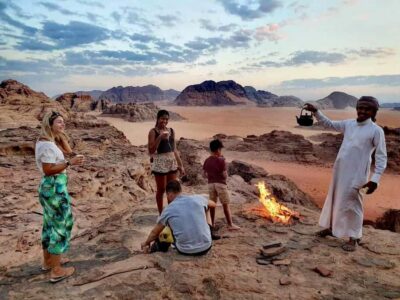
Browse the lists this tour appears in