
Reviewed · PETRA TOURS
Petra to Wadi Rum Trek – 6 Days
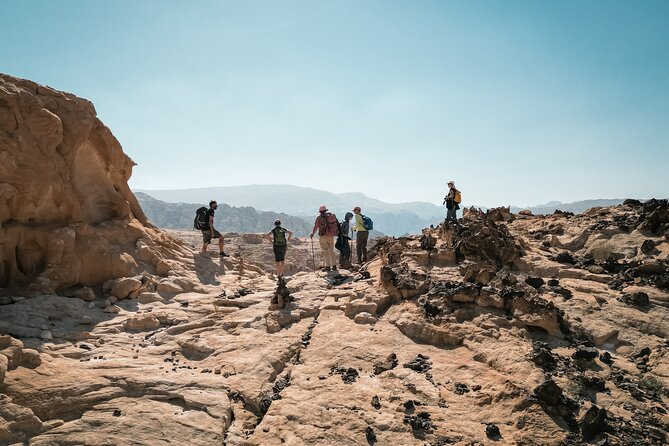
Petra to Wadi Rum is not a sightseeing bus trip with a short walk added on. It is a remote, six-day crossing through southern Jordan, linking two of the country’s great sights by foot. You leave the main Petra route near the Sabra Amphitheatre, pass through empty mountain valleys, and finish near Wadi Rum’s red sand and sandstone peaks.
I like the way this trek trades crowds for quiet trails, and I like that the price includes five nights, all meals, an English-speaking guide, and key transfers. The drawback is clear: this is a demanding wilderness hike, with rough ground, no waymarking on at least part of the route, and limited detail about daily support on the longer middle days.
Key points to know before booking
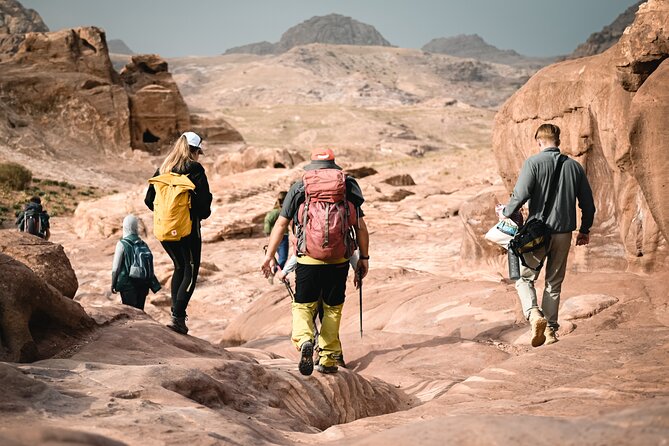
- Petra fades quickly: You leave the main tourist path near the Sabra Amphitheatre and head into a far quieter section of the Nabatean area.
- Six days means five nights: Accommodation, breakfast, lunch, and dinner are included for the full walking program.
- The first day is hard: Expect 24 kilometers, six to eight hours, 380 meters of ascent, and 740 meters of descent.
- The route is remote: Day two is not waymarked, and the trek crosses dry valleys, rugged mountains, and open desert.
- A jeep finishes the crossing: After reaching Abassiya near Wadi Rum, you transfer by jeep to the protected area.
- Small-group format: The maximum group size is 14 people, with a local English-speaking hiking guide.
From Petra’s monuments to the Sabra Amphitheatre
The trek begins at the Petra Museum in Wadi Musa at 7:30 a.m. A hotel transfer takes you to the walking start point, so you do not need to arrange your own ride to the trailhead.
The opening section is especially appealing because it gives you a different look at Petra. You turn away from the main route and pass the Sabra Amphitheatre, part of the larger Nabatean settlement beyond the famous Treasury and Monastery routes. From there, the path heads mostly downhill toward a remote camp.
That downhill profile sounds easy, but the first day is rated difficult. You cover 24 kilometers in six to eight hours, with 380 meters of climbing and a substantial 740 meters of descent. Long downhill stretches can be hard on knees and feet, especially on rocky ground. You need sturdy footwear, water capacity, sun protection, and enough fitness to keep moving late in the day.
The reward is the quick change in atmosphere. Petra’s well-known monuments give way to open country, dry valleys, and distant mountain walls. You still begin inside the wider Petra area, but the crowds disappear early. That contrast is one of the strongest reasons to choose this route instead of visiting Petra and Wadi Rum as separate day trips.
Other desert days out of Petra:
- Petra & Wadi Rum: Full Day Private Tour with Hotel Pickup
★ 4.9 · 310 reviews - From Petra to Wadi Rum, then back to Amman or the airport.
★ 5.0 · 16 reviews - Amman and Aqaba airport lift to Petra and Wadi Rum
★ 5.0 · 11 reviews
Day two: quiet mountains and oleander valleys
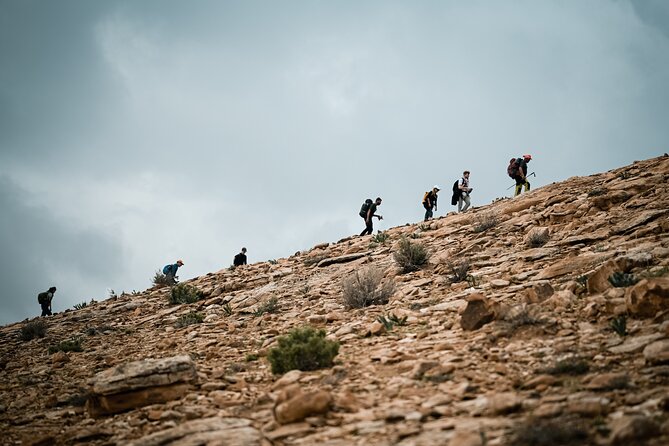
Day two covers 15 kilometers in roughly four to five hours. It is rated easy for physical effort and moderate for trail difficulty, with 290 meters of ascent and 320 meters of descent.
The walking continues south through rural desert mountains and rocky valleys. Oleander plants appear along parts of the route, adding a little color to an otherwise dry setting. This is a good example of how the trek works: the interest comes less from a single famous monument and more from the changing texture of the country.
The route is not waymarked. That matters. You are not following a painted tourist trail with signs at every turn. You need to stay with the guide and avoid wandering ahead, especially where dry valleys or rock shelves create several possible lines of travel.
The shorter distance gives you more time to notice the place. Look for folds in the rock, traces of water movement through the valleys, and changes in the ground underfoot. The scenery may feel empty, but it is not featureless. Your guide can also help explain plants, mountain ridges, and the human use of this region.
Days three and four: the heart of the wilderness
The supplied route information gives fewer measurements for days three and four, so you should ask for the exact distances and walking times before departure. The descriptions do make the character of these days clear: expect wild desert mountains, dry valleys, colorful canyons, unusual rock formations, views across Wadi Araba, and stretches of sand.
Day three continues south toward a camp near the Jordan Valley. You pass a cluster of mountains before descending toward the night’s stopping place. This should be one of the most remote parts of the trek, with little sense of nearby roads or town life.
Day four changes the mood again. Canyons and rock formations share the route with sand dunes, and the walking includes both climbs and descents. The mixture keeps the day interesting, but it also means you cannot judge the effort by distance alone. Loose rock, uneven footing, heat, and repeated short climbs can make a moderate-looking day feel tiring.
I would treat these two days as the section where a good guide matters most. The company’s hiking staff includes guides such as Mahmood Attal, Motaz, Raja, and Habu el Bedul, all named in connection with Jordan desert and hiking trips. Your guide is assigned according to the departure, so confirm the name and language before you go if that matters to you.
The camps also become important here. Five nights of accommodation are included, along with five breakfasts, five lunches, and five dinners. The exact accommodation setup is not specified in the supplied details, so ask whether each night uses a fixed camp, a tented camp, or another arrangement. In a remote setting, knowing what to expect at night helps you pack sensibly.
Day five: climbing out toward Wadi Rum
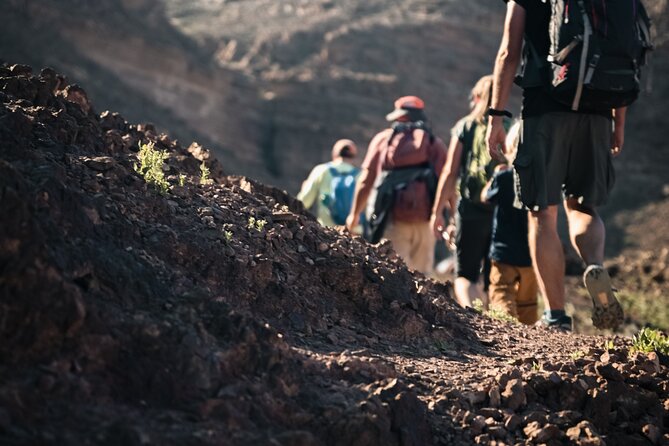
The final walking day begins with a long, gradual ascent out of the Jordan Valley. This is not a quick finish. You climb toward the desert plateau, then continue into the Wadi Rum area later in the day.
The route ends near the Bedouin village of Abassiya. From there, a jeep transfer takes you into Wadi Rum Protected Area. This is a practical finish to a demanding crossing. You reach the Wadi Rum region on foot, but you do not need to walk every final road or track to the campsite.
The jeep ride also marks a change in the trip. For five days, the main rhythm is walking, eating, camping, and watching the terrain change. In Wadi Rum, the red sand dunes, sandstone mountains, and large rock formations become the focus. You have moved from Petra’s carved stone to a much older-looking world shaped by wind, water, and erosion.
The day is listed at about six hours, though the long ascent may feel more important than the clock. If you are concerned about your pace, ask how the group handles different walking speeds. The maximum group size is 14, which is small enough for a guide to keep track of people without creating a large convoy.
Other ways to see the rose-red city from Petra:
- Lasting memories in Petra & Jordan
★ 5.0 · 270 reviews - 3-hour Private Guided Tour In Petra with hotel pick up.
★ 5.0 · 152 reviews - From Eilat: Petra Full-Day Guided Tour with Transfers
★ 4.1 · 98 reviews - Private Half-Day Tour of Petra with Lunch
★ 4.5 · 46 reviews
Day six: a quiet morning in Wadi Rum
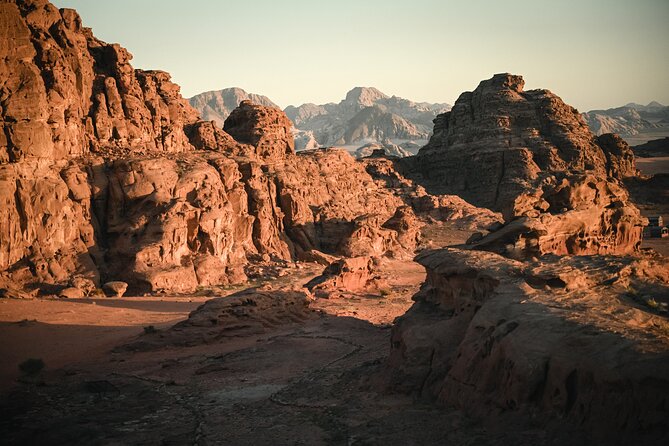
Day six begins at the Wadi Rum campsite. You wake among red dunes, sandstone mountains, and broad rock formations. The listed duration is 11 hours, but the trek itself ends in the morning after the night at camp.
This arrangement gives you a useful choice. Some people continue to Aqaba and the Red Sea. Others arrange a route to the Dead Sea or return to Amman. The operator can help organize a private extension, but those onward arrangements are not part of the $995 trek price.
The tour end point is Wadi Rum Protected Area, not Amman, Aqaba, or Petra. Plan your next move before you arrive, especially if you have a flight or a fixed hotel booking. Airport transfers are not included.
Wadi Rum works well as the ending because it gives you space to slow down after the hardest walking. You are not rushing from a canyon to a monument. The last morning is about the desert setting itself.
What the $995 price really covers
At $995 per person, the trek works out to roughly $166 per day before extra costs. That is not a budget walk, but the price includes several items that can be expensive and difficult to arrange separately in remote southern Jordan.
Included are:
- Five nights of accommodation
- Five breakfasts
- Five lunches
- Five dinners
- A local English-speaking hiking guide
- A transfer from your Wadi Musa hotel to the starting point
- A transfer from Hummeima to Wadi Rum on day five
You still need to budget for the Jordan Pass, tips, travel insurance, flights, airport transfers, and personal expenses. The Jordan Pass covers entry to Wadi Rum, but the supplied details do not say that all Petra admission costs are covered in this tour price. Confirm how your pass or entrance tickets apply before booking.
The meals are a real value on a route this remote. Carrying six days of food would add weight, and arranging daily meals across isolated valleys would be difficult. You should still ask what food is served and how dietary needs are handled, since no menu or special-diet policy is provided.
The physical challenge is the main decision
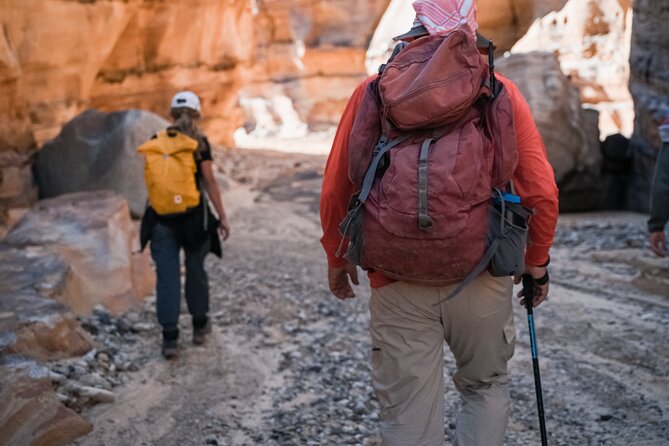
You should book this trek because you want a serious walk, not because you want the easiest way to connect Petra and Wadi Rum. The first day is difficult, day five includes a long ascent, and the route uses rough, remote terrain.
The trip requires a strong level of physical fitness. You need to be comfortable walking for several hours, handling uneven ground, climbing and descending, and spending long periods away from roads and services. The route details do not provide a total distance for the full six days, so ask for the complete mileage and elevation profile before paying.
Weather also matters. The experience requires good weather, and poor conditions can lead to a new date or a full refund. That policy is sensible for a remote desert trek, but it also means your plans need some flexibility.
Bring broken-in hiking shoes, sun protection, a hat, layers for changing temperatures, and a personal water supply suitable for a full walking day. The supplied information does not specify baggage transport, shower facilities, electricity, or luggage limits, so ask those questions directly.
The guide can shape the whole experience
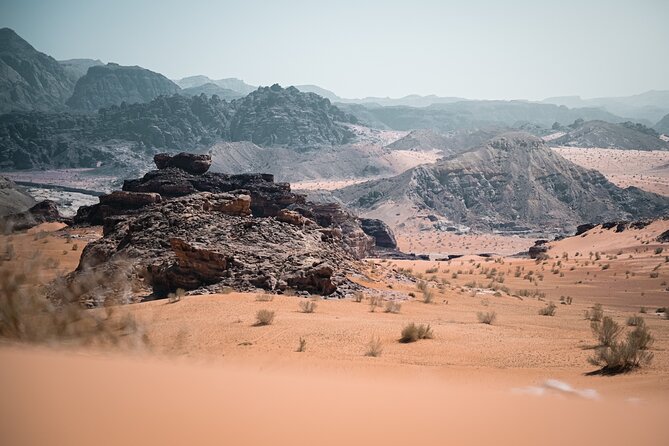
On a route without regular signs, the guide is more than someone who sets the pace. You rely on that person for navigation, timing, information about the terrain, and communication with the camp team.
The company’s wider hiking operation has included guides and staff such as Mahmood Attal, Motaz, Raja, Habu el Bedul, Hussein, Eid, and Abed. Some past trips also involved planners such as Dania and Shushan. These names cannot guarantee who will lead your departure, but they show the size of the local team behind the trips.
A strong guide can also make the dry country easier to read. A ridge, plant, riverbed, or rock formation may look ordinary at first, then become more interesting when you understand its place in the region. The best part of a walking trip here is often the explanation between the headline sights.
The English-speaking guide is included, but the exact level of interpretation is not defined. If cultural and historical explanation is a major reason for booking, ask how much time the guide normally spends explaining Petra, local communities, Bedouin traditions, plants, and geology.
Who should book this Petra to Wadi Rum trek?
This trip suits you if you want:
- A long point-to-point hike rather than short walks from a base hotel
- Remote desert scenery and quiet valleys
- A small group with a maximum of 14 people
- Guided navigation on a route that is not fully waymarked
- Camping and included meals
- A direct connection between Petra and Wadi Rum
- Help arranging onward travel after the trek
It is less suitable if you need comfortable hotels every night, fixed daily distances, easy access to roads, or a relaxed sightseeing pace. It may also be a poor fit if you are not ready for the first day’s 24 kilometers or the final day’s long ascent.
Cancellation terms are strict. A full refund is available when you cancel at least six full days before the start time. Cancellations two to six days ahead receive 50 percent, while cancellations less than two days ahead are not refunded. The operator can offer a new date or full refund if poor weather or insufficient numbers cancel the experience.
Should you book it?
Book this trek if the idea of walking from Petra into Wadi Rum appeals more than simply taking a vehicle between the two sites. You get a rare look at southern Jordan’s dry mountains, valleys, sand, and open plateaus, with meals, lodging, a guide, and the main remote transfers handled for you.
I would not book it without first confirming the missing practical details: exact distances for days three and four, camping arrangements, baggage handling, water access, food options, and the name of your guide. If you are fit, flexible, and happy with basic wilderness conditions, the $995 price offers a solid way to experience Jordan between its two best-known desert destinations.
FAQ
Where does the Petra to Wadi Rum trek start?
The trek starts at the Petra Museum in Wadi Musa, Jordan. The stated start time is 7:30 a.m., with a transfer from your hotel in Wadi Musa to the walking start point.
Where does the trek end?
The experience ends at Wadi Rum Protected Area, at the Wadi Rum campsite, on the morning after the hiking portion.
How long is the trek?
The experience lasts approximately six days and includes five nights of accommodation.
How difficult is the route?
You need a strong level of physical fitness. Day one is rated difficult, covers 24 kilometers, and takes about six to eight hours. Day two is rated easy physically and moderate for trail difficulty. Day five includes a long, gradual ascent.
How many people can join the group?
The maximum group size is 14 people.
Is the route waymarked?
Day two is specifically listed as not waymarked. The wider route is remote and rugged, so you should stay with the local hiking guide.
What meals are included?
Five breakfasts, five lunches, and five dinners are included.
Is accommodation included?
Yes. Five nights of accommodation are included. The supplied details do not specify the exact type of accommodation for each night.
Is transportation included?
A transfer from your Wadi Musa hotel to the start of the hike is included. A transfer from Hummeima to Wadi Rum on day five is also included. Airport pickup and drop-off are not included.
Is the Jordan Pass included?
No. The Jordan Pass is not included. It covers your entry fee to Wadi Rum, according to the supplied tour details.
Can the trek be canceled because of weather?
Yes. The experience requires good weather. If poor weather causes cancellation, you are offered a different date or a full refund.
More hikes around Petra
- Petra Back-Road Trail and Hike
★ 4.0 · 5 reviews - Dana to Petra Trek + Wadi Rum & the Dead Sea – 9 Days
★ 5.0 · 165 reviews - Full Day Desert Tour, Jeep & Hiking
★ 5.0 · 98 reviews - From Amman: Wadi Mujib Siq Trail Private Hiking Tour
★ 4.9 · 36 reviews
Just added in Petra
- From Petra to Wadi Rum, then back to Amman or the airport.★ 5.0 · 16 reviews
- Cooking outside in little Petra between the Mountains.★ 5.0 · 6 reviews
- Private Transfer From Petra to Amman or Airport With Optional★ 5.0 · 4 reviews
- Wadi Rum Day Tour from Petra ending in Aqaba★ 5.0 · 3 reviews
- Private transfer Petra to/from Wadi Rum★ 5.0 · 3 reviews
- Petra Highlight Tour with Private Guide Sami Nawafleh | 2.5 Hours★ 5.0 · 3 reviews
- Private Petra Back Entrance Tour with Guide .★ 5.0 · 16 reviews
- Private Departure Transfer: Petra Hotels to Amman Airport★ 5.0 · 4 reviews
Petra Tours, compared.
3-Day Private Tour from Amman: Petra, Wadi Rum, Dana, Aqaba, and Dead Sea
Read our review →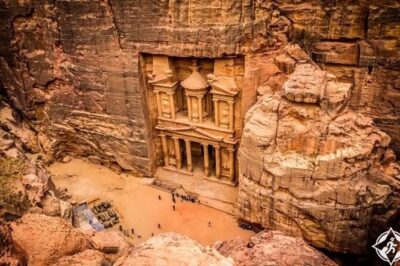
Petra & Wadi Rum: Full Day Private Tour with Hotel Pickup
Read our review →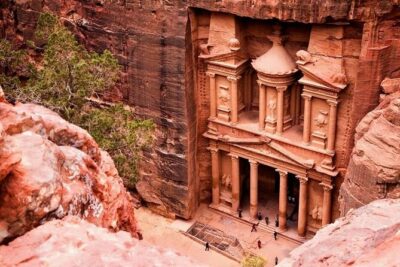
Browse the lists this tour appears in